A vendor contract defines more than what a supplier will provide. It can determine how much you pay, what happens when deadlines are missed, who is responsible when something goes wrong, and how either party can end the relationship.
Before signing a vendor agreement, take time to review the provisions that can affect your costs, obligations, business operations, and legal exposure.
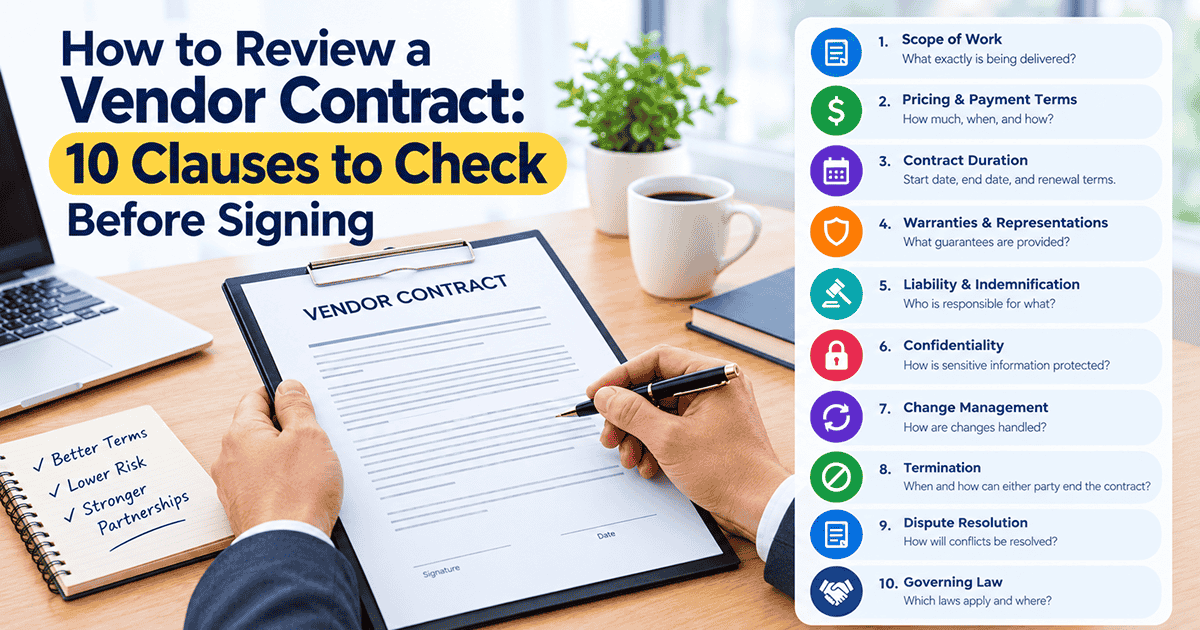
In this guide, we’ll walk through 10 important vendor contract clauses to check before signing.
What Is a Vendor Contract?
A vendor contract is an agreement between a business and a supplier or service provider. It typically explains what the vendor will provide, how much it will cost, when services or products must be delivered, and what responsibilities each party has.
Depending on the relationship, a vendor agreement may cover products, software, professional services, equipment, maintenance, logistics, or other business services.
The exact terms vary depending on the type of vendor and the transaction, so the contract should be reviewed in the context of the actual business relationship.
1. Scope of Services or Products
Start with the most basic question: What exactly is the vendor agreeing to provide?
Check whether the contract clearly describes:
• Products or services being provided
• Quantity or scope
• Specifications
• Deliverables
• Service standards
• Responsibilities of each party
• Any included or excluded services
Vague descriptions can create disagreements later. If a service, product, or deliverable is important to the relationship, make sure it is clearly documented.
2. Pricing and Payment Terms
Review exactly how much you will pay and when payment is due.
Look for:
• Contract price
• Payment schedule
• Deposits or upfront payments
• Invoicing requirements
• Late-payment fees
• Taxes
• Additional charges
• Price increases
• Renewal pricing
Also check whether the vendor can change pricing during the contract term and what notice is required before a price change takes effect.
3. Delivery and Performance Obligations
If the vendor is supplying products or services, the contract should explain when and how performance will occur.
Check for:
• Delivery dates
• Milestones
• Acceptance requirements
• Shipping responsibilities
• Service-level commitments
• Delays
• Performance standards
If timing is important to your business, don’t rely only on general language such as “promptly” or “within a reasonable time.”
4. Term and Renewal
Check how long the agreement will remain in effect.
A vendor contract may have:
• A fixed term
• An automatic renewal
• A month-to-month arrangement
• Renewal periods
• Notice requirements for non-renewal
Pay particular attention to automatic renewal clauses. Determine when you must provide notice if you do not want the contract to renew.
5. Termination Rights
Review what happens if either party wants to end the relationship.
Look for termination provisions covering:
• Termination for convenience
• Termination for breach
• Notice periods
• Unpaid amounts
• Insolvency
• Repeated performance failures
• Post-termination obligations
Also check what happens to outstanding orders, prepaid amounts, confidential information, data, and unfinished work after termination.
6. Warranties and Representations
Warranties explain what the vendor promises about its products or services.
Depending on the agreement, these may address:
• Product quality
• Performance
• Compliance with specifications
• Authority to provide the product or service
• Ownership of supplied materials
• Compliance with applicable requirements
Check whether warranties are clearly defined and how long they remain effective.
7. Liability and Indemnification
These provisions can significantly affect what happens if something goes wrong.
Review:
• Liability limitations
• Liability caps
• Excluded damages
• Indemnification obligations
• Third-party claims
• Exceptions to liability limits
Don’t look only for a liability cap. Check what the cap applies to and whether certain claims are excluded from it.
For example, intellectual property claims, confidentiality breaches, data-related incidents, or certain forms of misconduct may be treated differently depending on the contract.
8. Confidentiality and Data Protection
Vendors may receive access to confidential business information, customer information, systems, or other sensitive data.
Check whether the agreement addresses:
• What information is confidential
• How information can be used
• Who can access it
• Security obligations
• Data handling
• Required notifications
• Return or deletion of information
• Obligations after termination
If the vendor will process personal information, also check whether additional data-processing terms are required.
9. Intellectual Property Rights
Determine who owns the intellectual property created, supplied, or modified during the relationship.
Depending on the arrangement, this could include:
• Software
• Designs
• Reports
• Documents
• Marketing materials
• Technical specifications
• Custom work
• Data or other deliverables
Make sure the contract distinguishes between pre-existing intellectual property and materials created specifically for the engagement.
10. Governing Law and Dispute Resolution
Finally, check what happens if the parties disagree.
Look for:
• Governing law
• Jurisdiction
• Court location
• Arbitration requirements
• Mediation requirements
• Dispute procedures
• Attorneys’ fees provisions, where applicable
These provisions determine how contractual disputes may be handled and where the parties may need to resolve them.
Vendor Contract Review Checklist
Before signing, ask:
• Is the vendor’s scope clearly defined?
• Are pricing and payment terms clear?
• Are delivery or performance requirements specific?
• Does the contract automatically renew?
• Can either party terminate the agreement?
• Are warranties clearly stated?
• Is liability appropriately defined?
• Are confidentiality and data obligations addressed?
• Who owns the intellectual property?
• What law governs the agreement and how are disputes handled?
A contract review should also consider the specific industry, transaction, jurisdiction, and risks involved.
Common Vendor Contract Mistakes
Signing without reviewing the renewal clause — An automatic renewal provision can extend the relationship if the required notice is missed.
Accepting vague deliverables — If the contract does not clearly define what the vendor must provide, performance disputes can become harder to resolve.
Looking only at the price — Review fees, renewals, minimum commitments, taxes, and additional charges.
Ignoring termination provisions — Understand how you can exit the agreement before a problem occurs.
Overlooking liability limitations — A liability clause can significantly affect the financial consequences of a dispute.
Failing to check referenced documents — A vendor contract may incorporate schedules, policies, service descriptions, order forms, or other documents. Review those documents too.
How AI Can Help Review a Vendor Contract
Vendor contracts can contain many interconnected provisions, making it easy to overlook important language during a manual review.
An AI document analyzer can help you identify and organize provisions such as:
• Payment obligations
• Renewal terms
• Termination rights
• Liability limitations
• Indemnification
• Confidentiality requirements
• Data-related provisions
• Intellectual property clauses
• Missing or potentially concerning provisions
The results should be treated as a review aid, not a substitute for legal advice. For significant or high-risk vendor agreements, professional legal review may still be appropriate.
Frequently Asked Questions About Vendor Contracts
Q1: What should I look for when reviewing a vendor contract?
A: Start with the scope of work, pricing, payment terms, delivery obligations, renewal, termination, warranties, liability, confidentiality, intellectual property, and dispute provisions.
Q2: Should I review a vendor contract before signing it?
A: Yes. Reviewing the agreement before signing helps you understand the obligations, costs, responsibilities, and termination provisions you are agreeing to.
Q3: What is the most important clause in a vendor contract?
A: There isn’t one clause that is universally most important. The provisions that matter most depend on the type of vendor relationship, the services or products involved, the value of the agreement, and the risks associated with the transaction.
Q4: What is an automatic renewal clause?
A: An automatic renewal clause provides that the contract will continue for another period unless a party gives notice within the required timeframe.
Q5: Can AI review a vendor contract?
A: AI tools can help identify and summarize contract provisions and flag areas that may deserve closer review. They should not be treated as a replacement for qualified legal advice.
What to Do Before You Sign
A vendor contract should be reviewed as a complete agreement rather than by looking at the price or scope alone.
Pay particular attention to the 10 areas covered in this guide: scope, pricing, performance, renewal, termination, warranties, liability, confidentiality, intellectual property, and dispute resolution.
If the agreement contains unusual obligations, significant financial commitments, or provisions you do not understand, consider having a qualified legal professional review it before signing.
Need to review a vendor agreement? Use Indigo e-Docs AI Document Analyzer to analyze your document, identify important clauses, and surface areas that may need closer attention.
Need to review a vendor agreement?
Use Indigo e-Docs AI Document Analyzer to analyze your document, identify important clauses, and surface areas that may need closer attention.
Indigo e-Docs AI Document Analyzer